Trenching for Outdoor Security Wiring: Which Mini Excavator Size Fits the Job
A security camera on the far corner of the barn, a keypad at the end of the driveway, a motor on a sliding gate: every one of them needs power or a data cable, and the cleanest way to get it there is underground. Running the line through a trench and conduit keeps it away from mowers, weed eaters and rodents, and it looks a lot better than cable stapled along a fence.
The question we hear most is not whether to bury it. It is what to dig with. A shovel works for twenty feet. For two hundred feet out to a gate, most people end up looking at a small excavator. Here is how to pick the right size for the job.
Start with how deep the trench has to be
Depth is set by what is going in the ground, not by the machine. For power, the National Electrical Code (Table 300.5) sets minimum cover depths. The common ones on a security job:
- Rigid metal or IMC conduit: 6 inches of cover.
- PVC conduit: 18 inches.
- Direct-burial cable with no conduit: 24 inches.
- A residential 120-volt circuit of 20 amps or less, GFCI protected: 12 inches.
Low-voltage camera and access-control cable is handled differently, and the rules vary, so ask your local inspector. Either way, it cannot share a conduit with power wiring. Plan two conduits in the same trench, with the separation your inspector wants, or two trenches.
The point for picking a machine: almost every security trench is 12 to 24 inches deep. Even the smallest mini excavator digs several feet down, so depth is rarely what decides the size. Access and width are.
Then measure the way in

Gate and yard jobs are usually tight. Before you rent or buy anything, measure:
- The narrowest gap the machine must pass: a side yard, afence gate, the space between a house and a garage.
- What it will drive over: a lawn, a finished driveway, aseptic area.
- How far the trench runs, and whether it crosses a drivewayor a walk.
The smallest machines, around one ton, can pull their tracks in to roughly 30 inches wide. That gets through most standard yard gates. Machines in the 1.5- to 2-ton range are usually around 3 to 4 feet wide and dig faster, but they need a wider opening. Above 3 tons you are into machines that need real room to turn and a heavier trailer to move.
Match the bucket to the trench

For a conduit trench, the bucket matters as much as the machine. A narrow trenching bucket, 6 to 12 inches wide, digs a clean slot with less dirt to move and less lawn to repair afterward. A wide general-purpose bucket digs a ditch two or three times the width you need. When you rent, ask for a narrow bucket. When you buy, a narrow bucket is one of the first attachments worth adding.
Mini excavator or walk-behind trencher?
For a long, straight run across open ground, a walk-behind chain trencher can be quicker. It cuts a narrow, even slot in one pass. A mini excavator wins when:
- The run has turns, or goes around trees, posts and footings.
- The ground is rocky or full of roots, where a chain bouncesand wears.
- You need a wider pit at the end, like a pull box, a gateoperator pad or a footing for a camera pole.
- You have other digging to do on the same rental, like postholes, drainage or a pad.
Call 811 first, every time
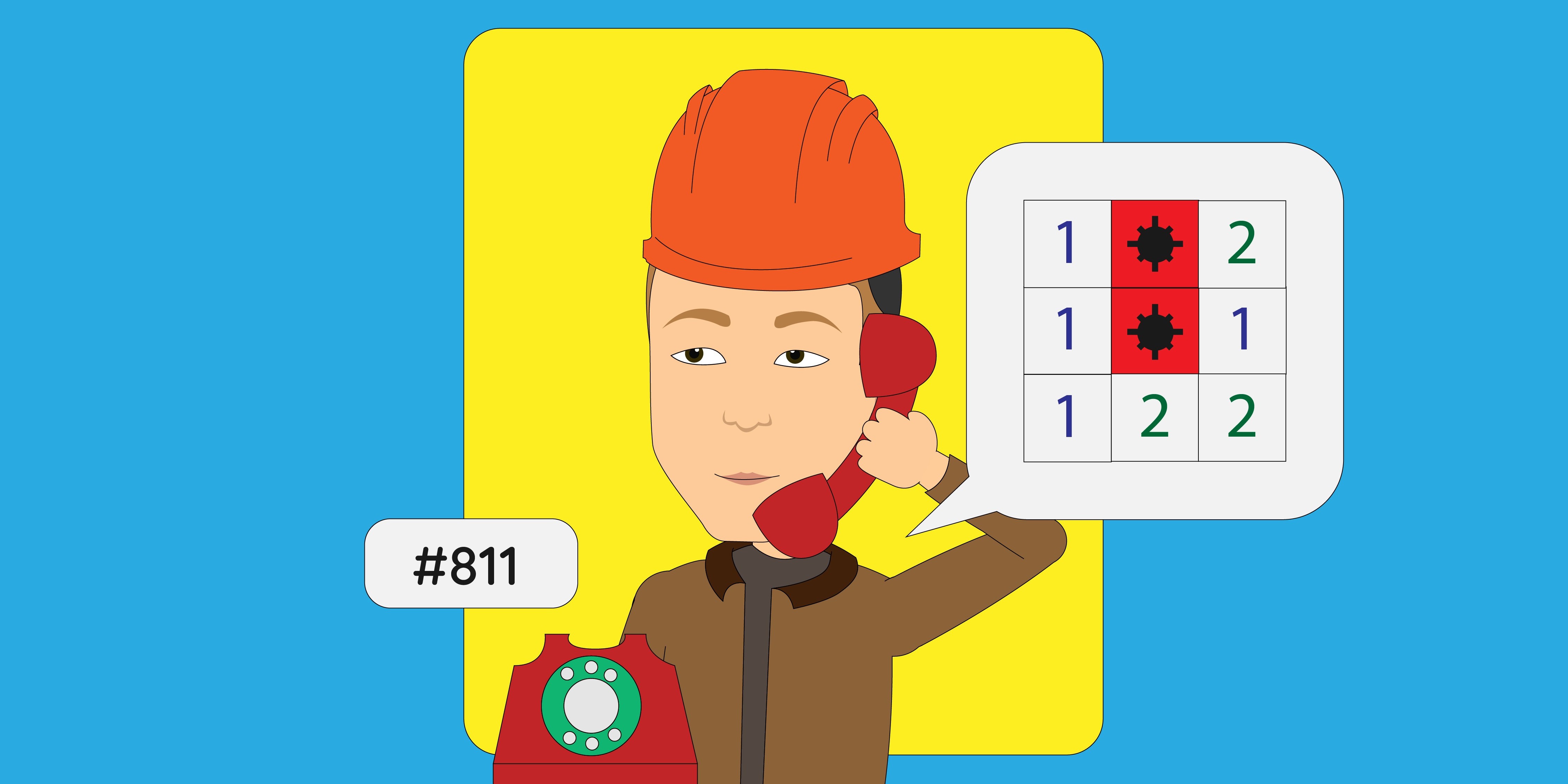
Before any digging, call 811 or file the request online a few business days ahead. It is free, and the utility companies mark their buried lines. It does not mark private lines: an existing feed to a shop, an irrigation line, a well pump line, the lighting your last contractor buried. Mark those yourself, and dig by hand within a couple of feet of any marked line. Hitting a buried power or gas line is the one mistake on a trenching job that can badly hurt someone.
A few habits that save the job
- Keep the trench straight and the bottom smooth. Rocksand lumps in the bottom are what crack conduit when you backfill.
- Lay pull string in every conduit, even the spare.Adding a cable later then takes minutes, not another trench.
- Put a spare conduit in while the trench is open. Itcosts very little now and saves a second dig when someone wantsanother camera.
- Backfill in layers and tamp them, or the trench willsink into a ditch after the first heavy rain.
- Lay warning tape about a foot above any power conduit, so the next person to dig there finds the tape before the wire.
Rent or own?
For one gate and two cameras, rent. A weekend with a small machine and a narrow bucket covers most homes and small businesses. If you are an electrician or security installer trenching every week, owning a compact machine and a trailer starts to pay for itself, and you stop planning jobs around rental availability.
The short version
Depth is set by the code and the conduit, and nearly any mini excavator can reach it. Pick the machine that fits through your narrowest gap, put a narrow bucket on it, call 811, and leave a spare conduit in the trench before you close it up.
About the author:
Braden Chupp works with Chupp Industrial, a family business in Chouteau, Oklahoma that has sold mini excavators and other compact equipment for more than 15 years. Learn more at chuppindustrial.com.


